UV Free LED Art Lights: A Guide to Safer, Truer Artwork Lighting
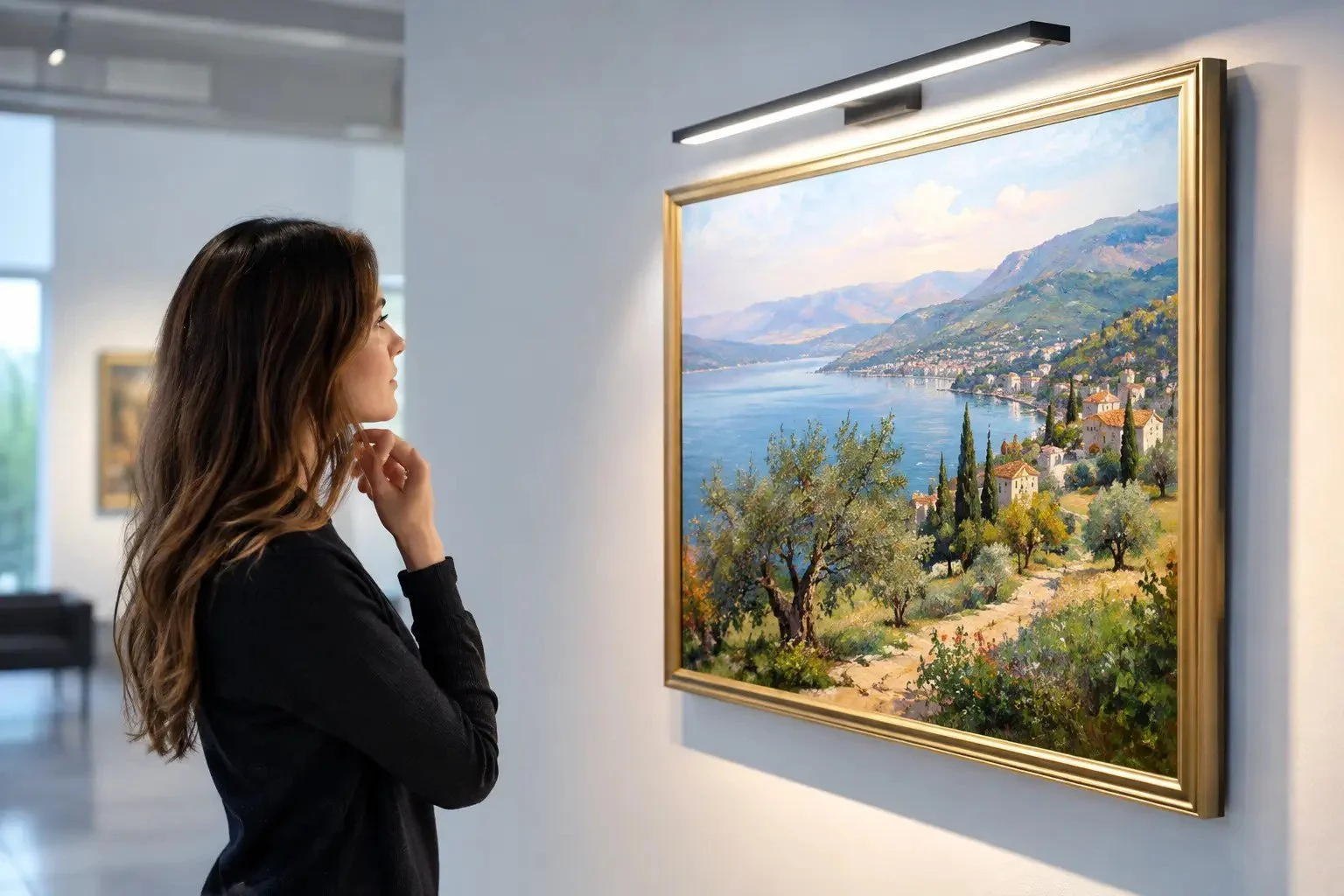
A painting can be perfectly placed, thoughtfully framed and still look diminished under the wrong light. UV free LED art lights address one essential part of that problem: they take ultraviolet radiation out of the viewing environment while giving artwork controlled, refined illumination.
For galleries, collectors and institutions in Malaysia, this is a decision about preservation, colour fidelity and the conditions in which an artist's work is seen. Light should clarify the work, not compete with it or quietly contribute to its deterioration.
What UV free LED art lights actually mean
Ultraviolet radiation is a high-energy part of the spectrum that can accelerate fading, yellowing and material change. Works on paper, watercolours, photographs, textiles, dyes and certain pigments are especially vulnerable.
UV free LED lighting is designed so that ultraviolet output is negligible at the source, rather than relying on a separate filter. That matters because filters can age, shift in performance or be left off during maintenance. Always check the manufacturer's specification for the fixture you are considering.
UV free does not mean risk free
Visible light also causes cumulative fading. For sensitive works, three questions matter:
How much light reaches the surface?
For how long?
With what spectral distribution?
A delicate watercolour shown at a high light level for years can still be damaged under UV free LEDs. Heat deserves attention too. LEDs generally direct far less infrared at artwork than halogen sources, but fixture heat, driver placement, ventilation and mounting distance still affect the local environment.
How to choose UV free LED art lights
Colour rendering
A high CRI is useful, but two fixtures with the same CRI can render reds, blues and dark neutrals differently. Look at the spectral data where available and assess the light on the actual artwork. Around 3000K often gives a natural presentation for paintings and warm materials, while a slightly cooler temperature can suit some contemporary work and photography. There is no universal setting.
Beam control
Narrow beams create a bright centre and leave edges underlit. Overly wide beams spill onto walls, frames and neighbouring works. Choose the beam angle for the artwork's size, hanging height, distance from the wall and frame depth, and use shielding, louvres or recessed optics so viewers do not see the source reflected in glazing or varnish.
Dimming
Good dimming lets you set light levels for material sensitivity, daylight and evening viewing. It should be stable and flicker-free, without colour shift at low output. This also matters wherever artwork is photographed or filmed.
Installation matters as much as the fixture
Position and aim. Angle fixtures to avoid viewer shadow and strong reflections, and test on site.
Check reflective surfaces. Glazing, metallic media, impasto and gloss varnish need extra care.
Keep the room coherent. Works need not be lit identically, but each level should be deliberate.
Plan for real use. Homes, galleries and event spaces need different levels of flexibility and control.
Display lighting and reproduction lighting are different
Gallery lighting is designed for the human eye in a physical space. Artwork reproduction photography needs calibrated capture conditions that manage colour, reflectance, texture and tonal range far more tightly. A beautifully lit painting is not automatically ready to photograph, and a capture setup is not necessarily right for display.
Frequently asked questions
Do LED lights damage artwork?
Any light causes some cumulative change. Well-specified LEDs remove most of the ultraviolet and infrared risk, but light level and exposure time still need to be managed.
What colour temperature is best for lighting paintings?
Around 3000K suits many paintings, but the right choice depends on the artwork and the room. Test on the work itself.
Are UV free LED art lights enough to protect works on paper?
They help, but sensitive works also need lower light levels, limited display time and, where appropriate, protective glazing.
Artwork lighting from Nuray Lab
The best lighting decision is rarely the most dramatic one. It lets an artwork hold the room quietly, with its colour intact and its surface legible. Explore Nuray Lab's art lighting and products, or contact us to discuss lighting for your gallery, collection or home in Malaysia.