Artwork Colour Calibration: Keeping Reproductions True to the Original
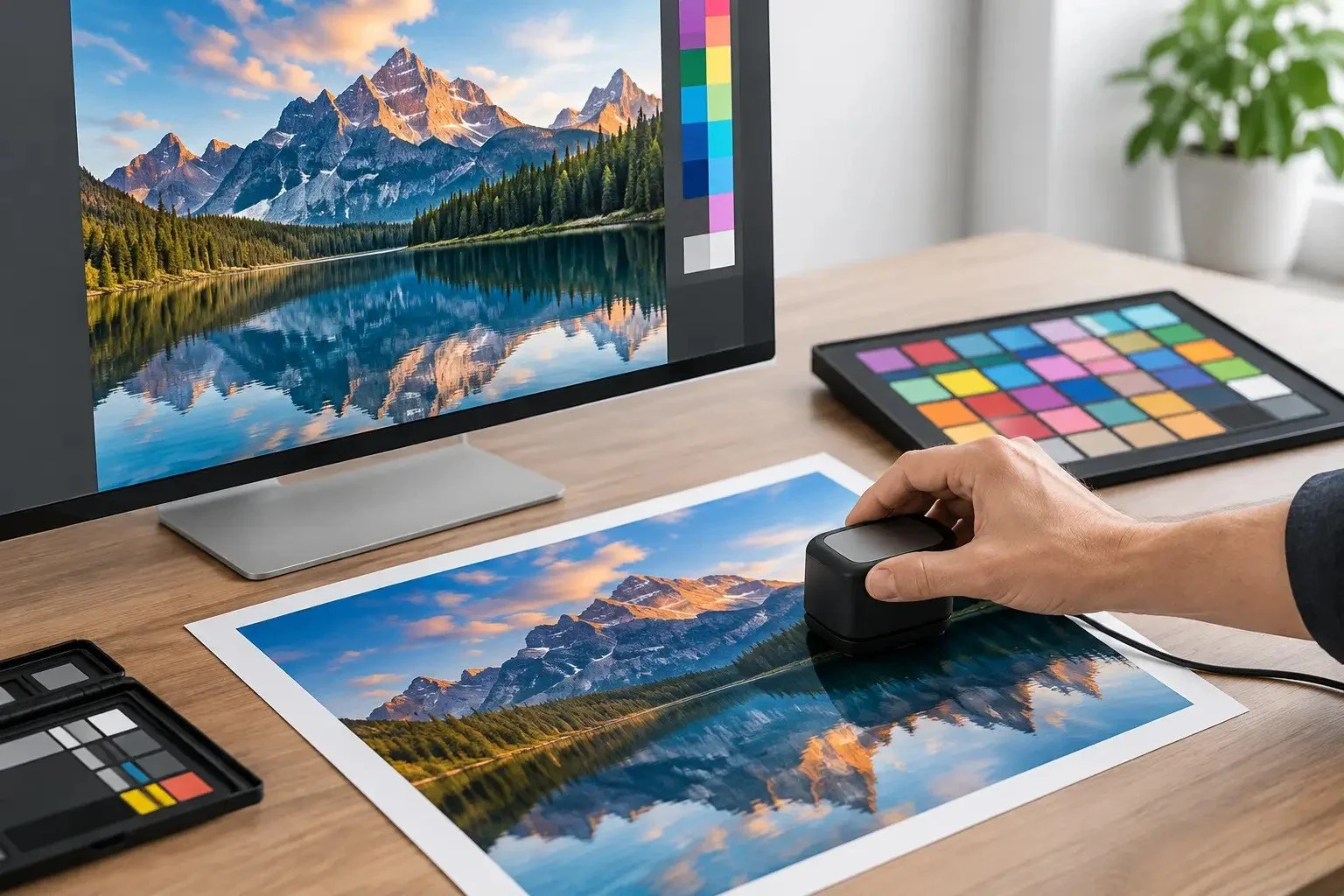
A painting can look settled and luminous in the studio, then turn flat, cool or oversaturated in a catalogue image. The fault is rarely in the artwork. It is usually somewhere in the chain of artwork colour calibration: the light used to photograph it, the camera's response, the monitor it is judged on and the print process that follows.
For artists, galleries, museums and collectors in Malaysia, colour accuracy is not cosmetic. It protects the visual record of an object, lets an edition be approved with confidence, lets a curator assess work remotely and lets a publication represent the artist's intent.
What colour calibration protects
Colour is relational. A warm white ground changes how a blue reads, and a deep green may carry yellow undertones that disappear under the wrong light. A reproduction can match each colour roughly and still feel wrong if those relationships are lost.
Calibration aligns capture, display and output so the reproduction stays as faithful as possible under an agreed viewing condition. It covers tonal scale, shadow detail, paper warmth, surface reflectance and the balance between saturated and quiet passages. It matters most for difficult work: glazed oils, watercolours, pastels, textiles, metallic leaf and mixed media. Even monochrome work needs it, because neutral greys drift easily towards blue, magenta or green.
Calibration begins before the camera
Light with an uneven spectrum distorts pigment relationships before a single frame is recorded, and mixed light from windows, room lamps and studio fixtures makes it worse. A professional setup controls the light source and the geometry between artwork, lights and camera:
Square to the camera, so the work is not distorted.
Evenly lit, so one side is not brighter or warmer than the other.
Reflections managed, especially on varnish, glossy prints and metallic or textured surfaces.
High colour quality light, which reveals a broad range of colours rather than merely looking bright.
The capture file is a starting point
Cameras do not see colour the way people do, and automatic settings are not a standard for artwork documentation. A disciplined process uses controlled exposure, custom white balance and a recognised colour target photographed under the same light as the work. From that, a custom camera profile gives a more accurate starting point.
Profiling does not remove judgement, it makes judgement accountable. Dense blues, fluorescent passages and subtle near-neutrals may still need careful review. A good file keeps detail in the darks without losing depth, keeps highlights from turning chalky and holds saturation in proportion to the original.
The monitor must be trustworthy
Editing on an uncalibrated monitor is like judging a print through tinted glass. Calibrate and profile the display regularly, set a sensible brightness and white point, and compare the screen with the artwork under controlled viewing light rather than in a bright, mixed-light room.
Print and online output
Printing needs its own profiles for each paper and printer, plus soft-proofing to see where colours fall outside what the paper can reproduce. Online, the same file will look different on every phone and laptop, so publish in a standard colour space and accept that the master file, not the web copy, is the record. Our guide to fine art print reproduction covers the print side.
Frequently asked questions
Why does my artwork look different in photos?
Lighting, camera processing, monitor settings and the viewing screen each shift colour. Calibration controls each step.
Is white balance enough for accurate artwork colour?
No. White balance corrects the overall cast, but a colour target and camera profile are needed to render individual colours accurately.
How often should a monitor be calibrated?
Regularly, for example monthly, and whenever colour-critical work is being approved.
Colour-accurate reproduction from Nuray Lab
A calibrated reproduction is one you can trust when the original is not in the room. Learn more about Nuray Lab's artwork reproduction service, or contact us to discuss photographing your paintings, editions or collection in Malaysia.