Museum Collection Digitisation: A Guide to Faithful Digital Records
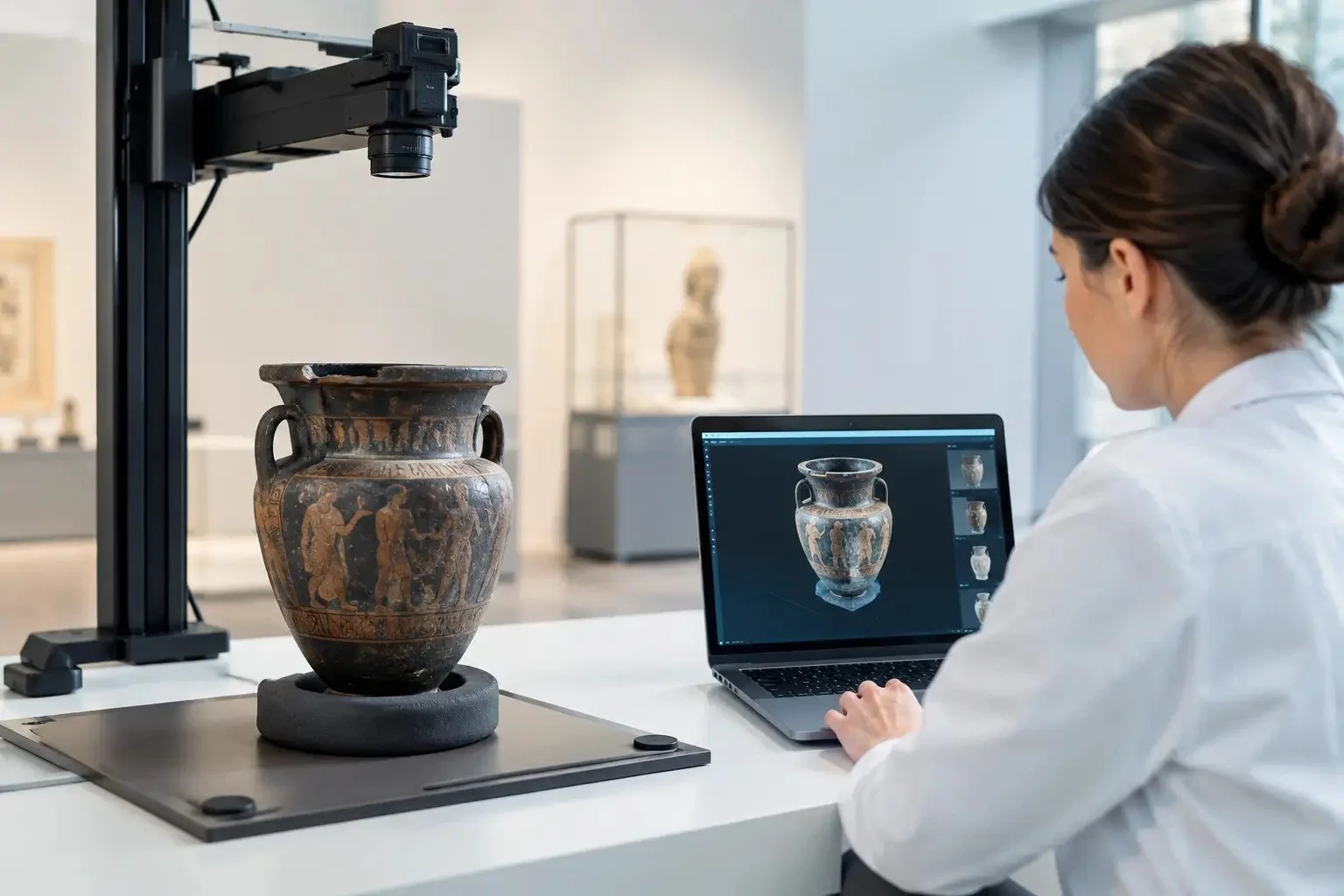
A digital record is not simply an image of an object. It is a lasting research and administrative asset. If colour shifts, surface detail disappears or key context is missing, the record weakens research, publication, lending, insurance and future conservation. This museum collection digitisation guide sets out how to build records that hold up.
For museums, archives, galleries and private collections in Malaysia, digitisation is an act of stewardship. The aim is not to make every object look the same on screen, but to create an accurate, usable record that preserves the work's visual character and documents how it was captured.
Begin with priorities, not equipment
Good programmes are organised around purpose. A public database, a conservation archive, a catalogue and insurance documentation all need different things. One capture can serve several, but only if standards are set before the first object reaches the studio.
Prioritise. Fragile works, frequently requested works, objects at risk and poorly documented groups usually come first.
Define outputs. Decide whether you need preservation masters, publication files, web images, detail shots or 3D records. This drives resolution, lighting, naming, storage and staffing.
Expecting one small JPEG to serve every future purpose is a false economy.
Set a standard before capture
Consistency does not mean treating every medium the same. A glossy oil painting, a textile, a reflective sculpture and a fragile drawing need different handling. Consistency means those decisions follow a written protocol covering preparation, handling, camera position, lenses, lighting, colour management, file formats, naming and quality review, and saying when the standard approach is not enough, for example with metallic, varnished, glazed or deeply textured surfaces.
Colour is a measurable responsibility
Control the viewing and editing environment, calibrate monitors and include colour targets according to the protocol. White balance alone is not a colour-management workflow. Our article on artwork colour calibration explains the full chain.
Keep the archival master separate from presentation images. A publication file may need disclosed adjustments for layout or print, but the master should stay a defensible record with only the corrections needed for accuracy.
Light for form, not for effect
Flat light suppresses texture, while strongly directional light exaggerates it. For two-dimensional work, even illumination and controlled reflection come first. For sculpture and relief, several views may be more truthful than one. Where condition matters, add detail and raking-light images alongside the main record, as described in our guide to raking light photography.
Build metadata that outlives the project
An image without reliable metadata is hard to find, interpret or trust. Link each file to a stable object identifier in the collection management system and record at least:
Title, maker, date, medium and dimensions
Rights status and current location
Capture date, photographer and setup notes
Any departure from the standard procedure
Store, check and maintain
Keep preservation masters in more than one location, check files periodically for corruption and plan for format migration. Review a sample of images against the objects to catch drift in lighting or colour before it spreads through the archive.
Frequently asked questions
Where should a museum start with digitisation?
With priorities and intended uses, then a written capture standard, before buying equipment.
What file formats should be kept?
An uncompressed or losslessly compressed preservation master, plus derivatives such as JPEGs for web and publication.
Why does metadata matter so much?
Without it, images cannot be reliably found, linked to objects or trusted years later.
Collection imaging from Nuray Lab
A faithful digital record keeps a collection useful long after the project ends. Learn about Nuray Lab's artwork reproduction and imaging services, or contact us to plan digitisation for your museum or collection in Malaysia.