Museum LED Lighting: How to Choose LEDs That Do Justice to Art
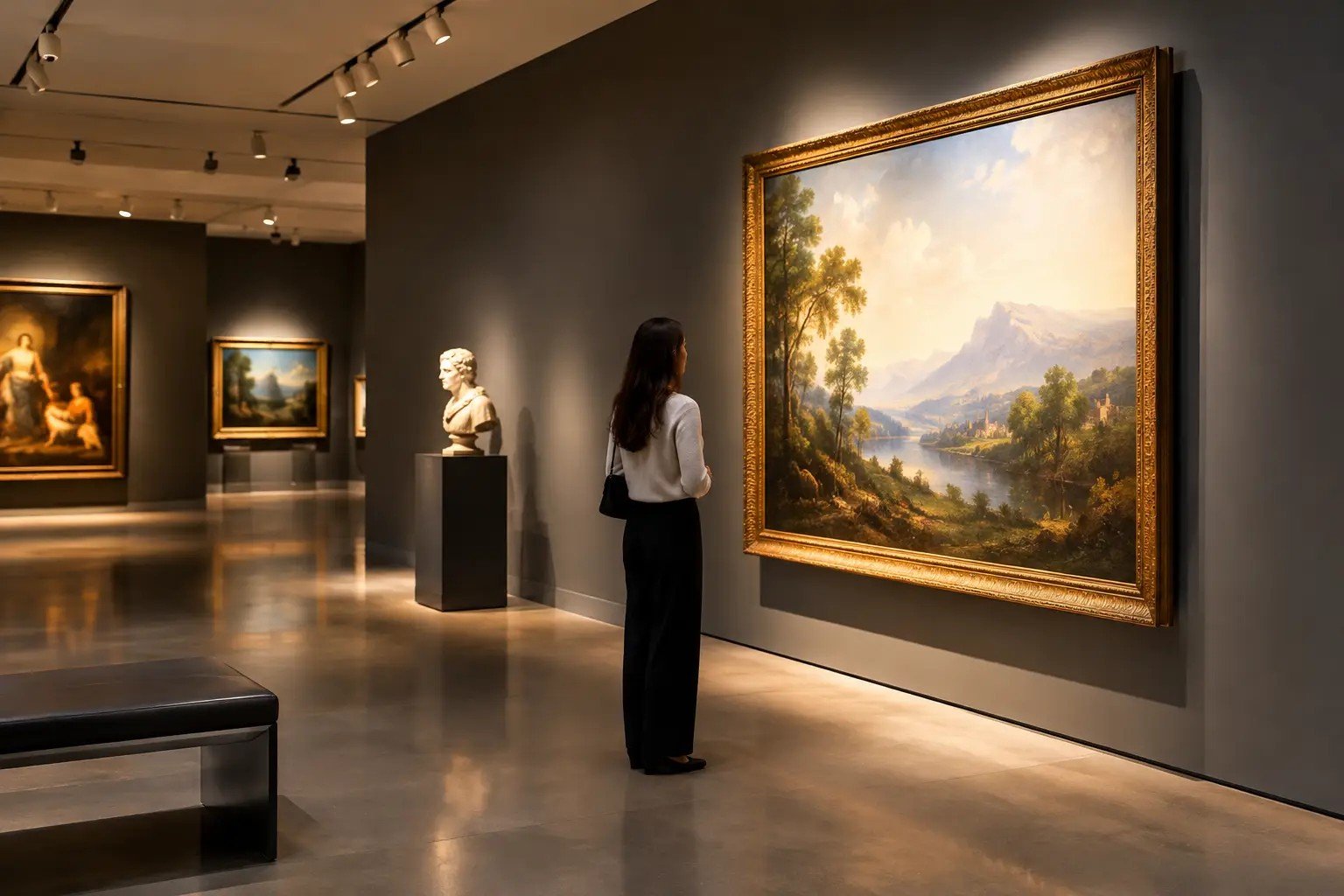
A painting can be impeccably conserved and still be misrepresented the moment it goes under poor light. Museum LED lighting is not just a matter of swapping old fixtures for efficient ones. It is a curatorial instrument that decides how colour, texture, scale and atmosphere are experienced in the room.
For museums, galleries, collectors and artists in Malaysia, the standard is higher than brightness. The light must support the work without competing with it, reveal what the artist made without reinterpreting it, and take proper care of vulnerable materials.
Light is part of the viewing condition
A warm-toned painting can turn dull under a poorly balanced source. The blue-black passages of a photograph can close up under heavy contrast. A sculpture's tool marks can vanish under frontal light, while a textured canvas turns theatrical when shadows are overplayed. Lighting belongs alongside wall colour, viewing distance, framing and glazing as part of exhibition design.
LEDs give far finer control than older systems: stable output, focused distribution, low heat at the artwork and sophisticated dimming. But that does not make every LED fixture suitable for art. Spectrum, optics, driver quality and installation still decide whether a work is seen faithfully.
Colour fidelity is more than a high CRI
A CRI of 90 or above is a sensible starting point for art display, but CRI alone cannot describe how a source renders every pigment, dye, textile and neutral in a collection. A fixture can score well overall yet render saturated reds, deep blues or skin tones less convincingly than another.
A fuller assessment looks at spectral power distribution and measures such as TM-30, which report both fidelity and gamut. The aim is not more vivid colour. It is to keep the artwork's intended relationships intact, because a source that flatters one work can distort the next.
Colour temperature needs the same judgement. Warmer settings suit historic interiors and traditional collections, while neutral white can serve contemporary spaces and photography. Our guide to museum lighting colour temperature explains the choice.
Evaluate the work, not just the specification sheet
Review lighting samples against real artworks or accurate references whenever possible. Look at pale neutrals, dark passages, reds, blues, skin tones and metallic surfaces, and at whichever colours matter most to the collection. Oil paint, ink, photography, textiles, works on paper, ceramic glaze and polished metal all respond differently.
Conservation begins with exposure control
LEDs reduce some risks of older sources, particularly ultraviolet and infrared, but visible light still causes cumulative fading. The question is how much exposure each work can reasonably take.
Know the sensitive works. Paper, textiles, dyed materials, colour photographs and some inks need far more care than oil, stone or metal.
Manage light and time together. Plan illuminance, exposure hours and rotation as one programme.
Dim with quality. Fixtures should hold their colour and stay flicker-free across the whole dimming range.
More on this in our article on how to prevent light damage to artwork.
Optical control shapes attention
A fine spectrum cannot make up for careless beam control. Light should land on the work and stay out of viewers' eyes, off neighbouring works and away from reflective surfaces.
Match the beam to the work. Narrow beams isolate small pieces, wider ones cover large canvases. Too narrow creates hotspots, too wide flattens the wall.
Set the angle carefully. Around 30 degrees from vertical is a common starting point for wall-hung work, then adjust for frame depth, glazing, ceiling height and sightlines.
Handle texture with restraint. Raking light reveals impasto and relief, but can exaggerate every flaw. See lighting for textured artwork.
Frequently asked questions
Is LED lighting safe for museum artworks?
Well-specified LEDs cut most ultraviolet and infrared risk, but visible light still causes cumulative change, so light levels and display time must be managed.
What CRI do museums need?
90 or above is a common baseline, but also check spectral data such as TM-30 and test on real artworks.
What beam angle is best for paintings?
It depends on the painting's size and the mounting distance. Choose the narrowest beam that covers the work evenly without hotspots.
Museum LED lighting from Nuray Lab
The right LED system disappears into the experience and leaves the artwork in charge. Explore Nuray Lab's art lighting and products, or contact us to specify museum-grade LED lighting in Malaysia.