Artwork Photography for Insurance Documentation: What to Record
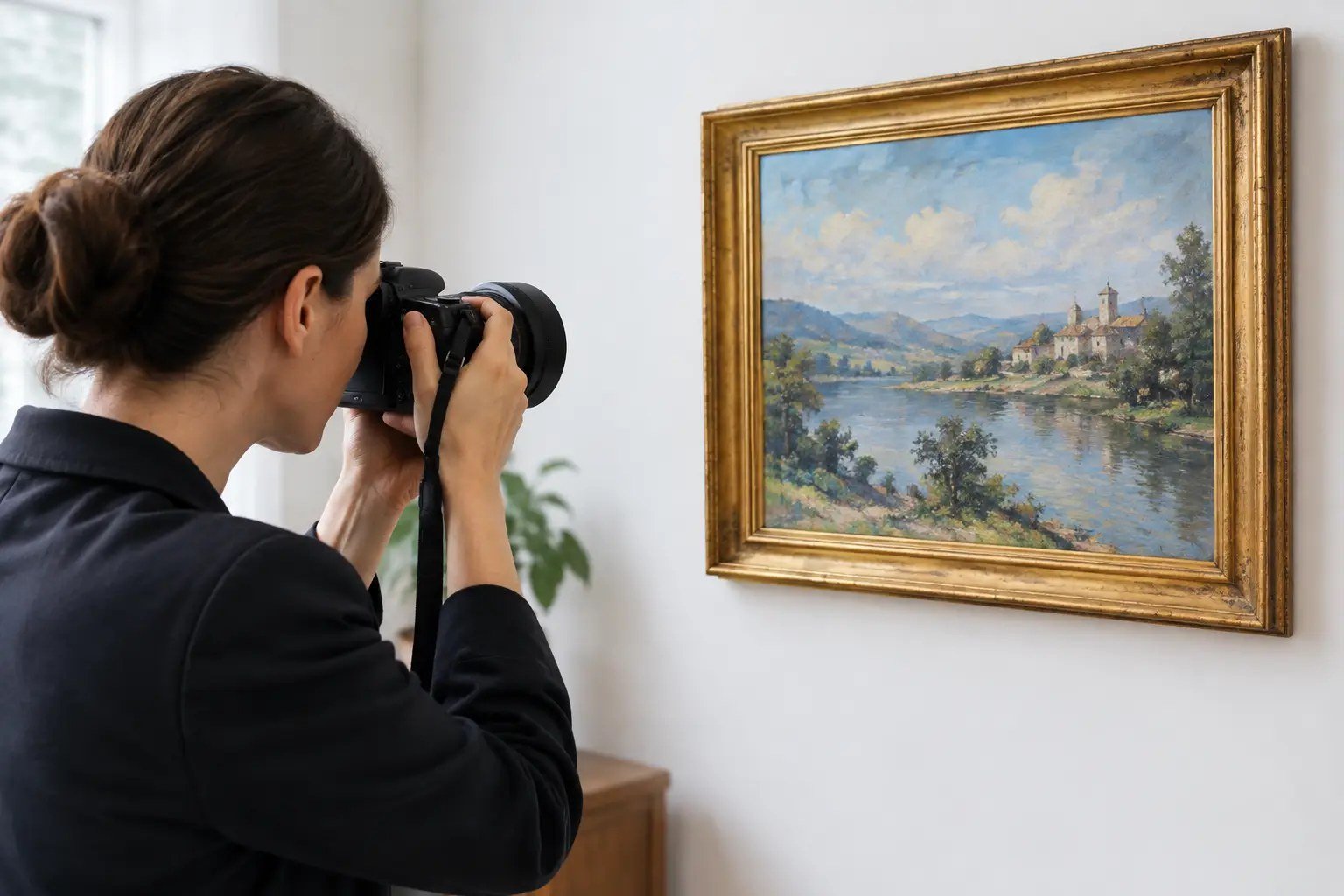
A painting may be irreplaceable long before its market value is calculated. Yet after water damage, theft, fire or a handling incident, memory is a poor substitute for evidence. Artwork photography for insurance documentation creates a clear visual record of what existed, how it looked and what condition it was in at a specific point in time.
For artists, collectors, galleries and institutions in Malaysia, a properly made record supports insurance claims, condition comparisons, collection management, loan requirements and conversations with conservators or appraisers when the unexpected happens.
What artwork photography for insurance documentation needs to show
Insurance photography should establish identity before it attempts atmosphere. The aim is a faithful, legible record of the artwork and its condition, not a promotional image.
Start with a full, frontal image that shows the complete work squarely, without perspective distortion, glare, cropped edges or reflections. Then connect the image to the details that identify the work:
Artist, title and date
Medium and dimensions
Edition number, where applicable
Current insured value
Photography does not replace a schedule of values, a receipt or a formal appraisal. It makes those records more useful by tying them to the particular physical work.
A beautiful image is not the same as an evidentiary one
An installation photograph favours mood, with directional lighting, surrounding architecture and reflections that make a work feel alive in a room. An evidentiary image favours clarity. It should let a viewer inspect the surface, edges and overall state of the piece without wondering whether a shadow belongs to the artwork or to the lighting.
The difference matters most with gloss varnish, metallic pigments, encaustic, resin, glass, polished sculpture and heavily textured paint. This is where professional artwork reproduction photography, with controlled illumination, calibrated colour and careful camera alignment, earns its place.
The essential record: four views of every artwork
Full frontal image of the entire artwork.
Rear image showing the verso, frame, stretcher, backing, labels and hardware.
Detail images of signatures, labels, edition numbers, inscriptions and distinctive marks.
Condition images of existing cracks, abrasions, stains, losses, distortions or repairs.
Sculpture and other three-dimensional works need photographs from several sides, including the base, underside, joins and any vulnerable elements. Frames deserve their own images too: corners, ornament, glazing and mounting. A wide shot of the work in its location, showing wall height and proximity to windows or plumbing, is useful supporting evidence but not a replacement for direct documentation.
Colour, texture and surface condition
A shifted white balance can make paper look yellowed or cool a warm ground. Consistent lighting and a controlled colour workflow keep the record faithful to the artist's tonal decisions.
Raking light, placed at a low angle across the surface, reveals impasto, scratches, cracks and planar distortion. Used alone it can give an unrepresentative picture, so pair it with a neutral, even view. Highly reflective works may need polarising techniques or carefully managed light placement. There is no universal setup.
Pair images with records that can be verified
Keep each artwork's images with its invoices, appraisals, certificates of authenticity, conservation reports and condition reports.
Use a consistent file name, such as inventory number, artist surname and capture date.
Store original high-resolution files in more than one secure location, with at least one copy off-site or in the cloud.
Record the capture date, and update the record after conservation, reframing, relocation, a loan return or any incident.
When to use a specialist photographer
A careful smartphone image is better than no record and may be enough for an informal inventory of lower-value objects. Its limits are lens distortion, uncontrolled lighting, reflections, inconsistent colour and missing surface detail.
Specialist photography is most appropriate when a work is high-value, historically significant, technically difficult to capture, frequently loaned or part of a collection with institutional obligations. It also makes sense when one image set must serve insurance, archive, publication and portfolio use.
Frequently asked questions
How many photographs does an insurance record need?
At least four views per artwork: front, back, identifying details and existing condition. Complex, fragile or three-dimensional works need more.
Does a photograph replace an appraisal or valuation?
No. Photographs support the valuation, receipts and other paperwork by linking them to the specific physical work.
How often should artwork documentation be updated?
After any change to the work, such as conservation treatment, reframing, relocation or a loan, and at regular intervals for active collections.
Document your collection with Nuray Lab
The best time to photograph a work for insurance is when nothing has gone wrong. Nuray Lab provides colour-managed, high-resolution artwork reproduction photography in Malaysia for artists, collectors, galleries, museums and archives. To document a single work or a full collection, contact us.