Artwork Photography for Juried Shows: A Submission Guide
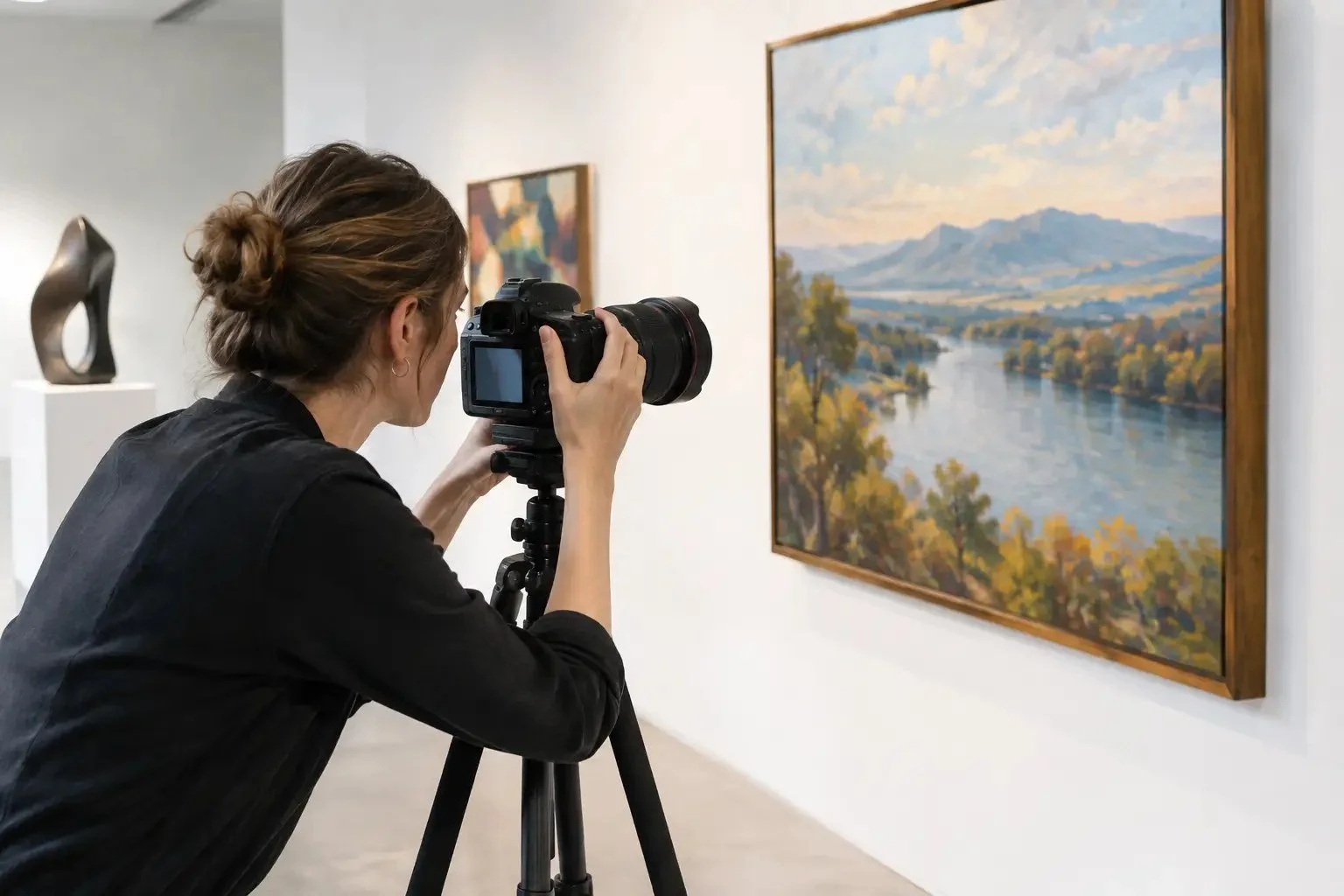
A juror may spend less than a minute with an image of a work that took months, or years, to make. Artwork photography for juried shows must therefore do more than produce a pleasing file. It has to give the reviewer an honest encounter with the work: its colour relationships, tonal structure, edges, material character and physical presence.
For artists in Malaysia entering open calls, art prizes and competitions at home or abroad, the submitted image is often the work's first representative. When photography adds a colour cast, flattens texture, clips highlights or skews the shape of the piece, the image starts working against the artwork.
What artwork photography for juried shows must do
A submission image is not a campaign image. It should not stylise the work or borrow authority from an elaborate interior. Its job is to make the work legible on a screen, inside a submission portal, in very little time.
Faithful colour. A red that drifts to orange or a grey that turns blue changes the decisions a juror sees in the work.
Full tonal range. Keep detail from the deepest shadow to the brightest highlight.
Real detail, not forced sharpness. Over-sharpening creates halos and a brittle digital surface that the original does not have.
Start with the show's requirements
Read the prospectus as carefully as your artist statement. Most calls specify:
Maximum pixel dimensions and file size
Accepted file format and colour space
File naming convention
Number of views, and whether detail images are allowed
Create a high-resolution archival master first, then export a submission file from it at the requested size. A clean, correctly sized JPEG usually performs better than an oversized file that the portal compresses. Name files consistently, for example lastname_title_year_view.jpg, and avoid special characters.
Photograph the work square, even and whole
Keep the camera parallel to the artwork so a rectangular work stays rectangular without heavy correction.
Light the surface evenly with no falloff from one side to the other.
Control reflections on varnish, metallic leaf, resin and glazing through light placement, angle and polarisation. Editing cannot restore what glare has hidden.
Show the entire work with clean edges, and include the frame only if the call asks for it.
Good lighting matters more here than camera specification. A matte charcoal drawing, a heavy impasto painting and a photograph behind acrylic each need different lighting decisions.
Preserve texture without turning it into spectacle
Raking light describes relief well, but it can make a work look rougher or more dramatic than it is. Let the primary image show the faithful overall appearance. Add a detail image only when surface is integral to the work and the call permits it. If the detail looks stronger than the whole, revisit the main photograph.
Sculpture, ceramics and installation need lighting that establishes form without theatrical contrast, plus views that explain scale and depth where allowed.
Colour management and editing
You cannot control a juror's screen, which makes a controlled capture and export workflow more valuable. Work from a calibrated monitor, photograph under stable light, use a colour target where appropriate, and compare the file with the artwork itself.
Correct perspective, neutralise colour casts and remove dust from the capture. Do not boost saturation, deepen shadows for drama or whiten paper beyond its real character. Editing should clarify the record, not change the work.
Review the image at submission size
Before uploading, inspect the exported file at 100 percent and at the size a juror will actually see. Look for blocked shadows, clipped highlights, JPEG artefacts, banding, dust and moire. Then ask a simpler question: does the image feel calm, with attention going straight to the artwork?
Frequently asked questions
What image size should I submit to a juried show?
Use exactly what the prospectus asks for. Export it from a high-resolution master rather than resizing a small file upwards.
Should I photograph my artwork framed or unframed?
Unframed with clean edges, unless the call specifically requests framed presentation or the frame is part of the work.
Can I photograph my own artwork for a juried show?
Yes, especially for small, matte works with a consistent setup. Large, reflective, textured or hard-to-reshoot works usually benefit from professional reproduction.
Prepare your submission with Nuray Lab
A dependable master image can serve a work for years, across applications, catalogues, editions and archives. Nuray Lab offers colour-managed, high-resolution artwork reproduction photography in Malaysia for artists, galleries and institutions. To prepare work for your next submission, contact us.