Lighting for Sculpture Displays: How to Reveal Form, Material and Depth
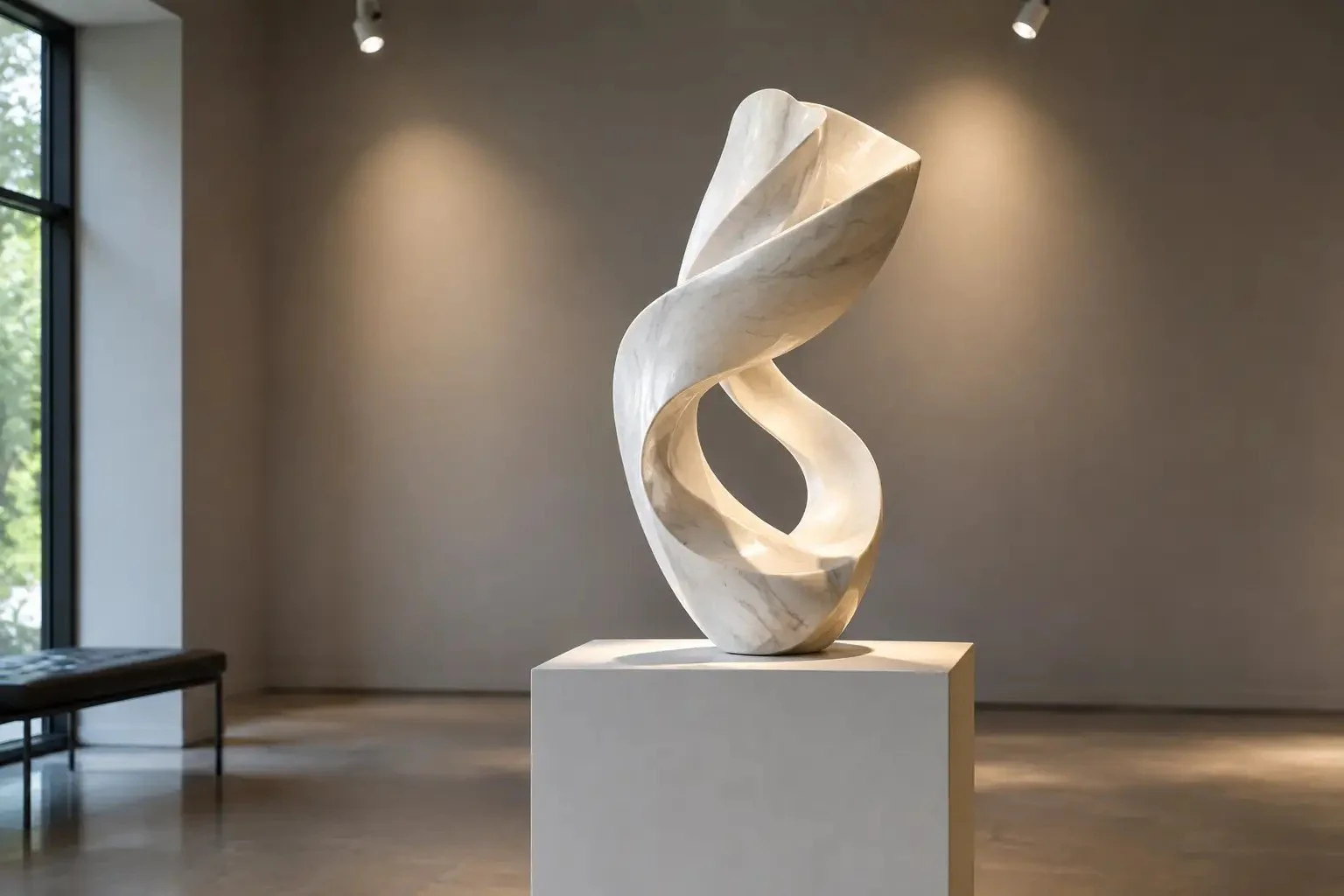
A sculpture can be fully visible and still be poorly seen. Broad frontal light flattens a shallow relief, a polished bronze turns into a mirror of the room, and carved stone loses its modelling. Good lighting for sculpture displays is not about brightness. It is the controlled use of light so that form, material, scale and the artist's intent stay legible.
For galleries, museums, collectors and artists in Malaysia, this carries both aesthetic and custodial weight. The right light gives a viewer access to the object. The wrong light shifts its colour, hides its texture or adds conservation risk.
Start with the sculpture, not the fixture
Sculpture is experienced in volume, and its reading changes as the viewer moves around it. Before choosing a fixture or a beam angle, study the work's geometry, surface, palette and position in the room.
A matte plaster figure, a dark patinated bronze, a translucent resin piece and a mirror-polished steel form are four different lighting problems. The useful question is not how to make the object brighter, but what the viewer must perceive: the tension in a modelled shoulder, tool marks in carved wood, colour shifts in a glaze or a quiet silhouette.
Form, texture and surface
Form. Directional light creates the gradients that describe volume. A source close to the viewer's axis flattens the work, while moving it off-axis introduces measured shadow.
Texture. Low-angle light reveals detail in stone, wood, clay and cast metal, but it also exaggerates cracks, joins, dust and repairs. Our guide to raking light photography for artwork shows how strongly angle changes a surface.
Reflective surfaces. On polished metal, glass, lacquer and glazed ceramic the fixture itself can appear as a highlight. The aim is not to remove every reflection but to control where highlights fall and how large they are.
Colour quality is a matter of fidelity
High colour rendering LEDs suit professional display, but a strong CRI figure does not guarantee a faithful result. Red rendition, spectral balance and consistency between fixtures all matter, and two sources with similar ratings can look different on ochres, deep blues and oxidised metals.
Colour temperature should support the work and the architecture. Warmer light can bring cohesion to wood and bronze, while neutral white often serves contemporary and mixed-material displays. Whichever you choose, keep it consistent so a sculpture does not look cooler at one end of the room than the other.
Beam control decides what the eye notices
A narrow beam can isolate a small work but leaves abrupt falloff across a large one. A wide beam covers a substantial piece but spills onto walls, labels and neighbouring works. Often the most convincing result is layered: one directional source to establish form, moderated by a second that keeps detail in the shadows.
Shadow is part of sculpture's visual language, so the goal is not to remove it. The concern is excessive contrast, where important areas become unreadable or a cast shadow dominates the view. Snoots, louvres and barn doors shape the beam so the edges of the light feel intentional.
Light for a moving viewer
Walk the full perimeter. Aim for one viewpoint only and the work may collapse from another.
Check standing and seated eye levels. Look for glare and for highlights that travel across the work as you approach.
Watch the wall. A cast shadow should not compete with the silhouette.
Account for plinth height. An angle that suits a floor piece may fail on a small object at eye level or in a niche.
Conservation needs more than LED
LEDs have greatly reduced the heat and ultraviolet associated with older lamps, but light is still a cumulative agent of change. A sculpture may combine painted wood, textile, wax, adhesives or paper elements that are more sensitive than its main material suggests.
Use dimming, scheduling and tightly targeted beams to limit unnecessary exposure, and review the plan against conservation requirements before installation rather than after. Our article on UV free LED art lights covers what the term does and does not promise.
Focus on site, and photograph separately
A specification sets quality, but focusing sets meaning. Aim the lights with the sculpture installed and the wall colour in place. Bring up one fixture at a time, and if a light does not improve the reading of the object, remove it.
Photographs help during focusing, but a camera compresses space and reads highlights differently from the eye. Display lighting and artwork reproduction photography serve different purposes, so a well-lit sculpture is not automatically ready for a catalogue image.
Frequently asked questions
What is the best angle to light a sculpture?
There is no single angle. Start with one source above and to the side of the main viewing position, then adjust until the form reads clearly from every side visitors use.
How many lights does a sculpture need?
Often two: a main directional light for form and a softer second source for shadow detail. Large or freestanding works viewed in the round may need more.
What colour temperature suits bronze and stone?
Warmer white often flatters bronze and wood, while neutral white suits pale stone and contemporary settings. Test on the work itself.
Sculpture lighting from Nuray Lab
The best sculpture lighting holds the form quietly and lets the material speak. Explore Nuray Lab's art lighting and products, or contact us to plan lighting for sculpture in your gallery, collection or home in Malaysia.