Art Conservation Begins Before Treatment: Care, Light and Documentation
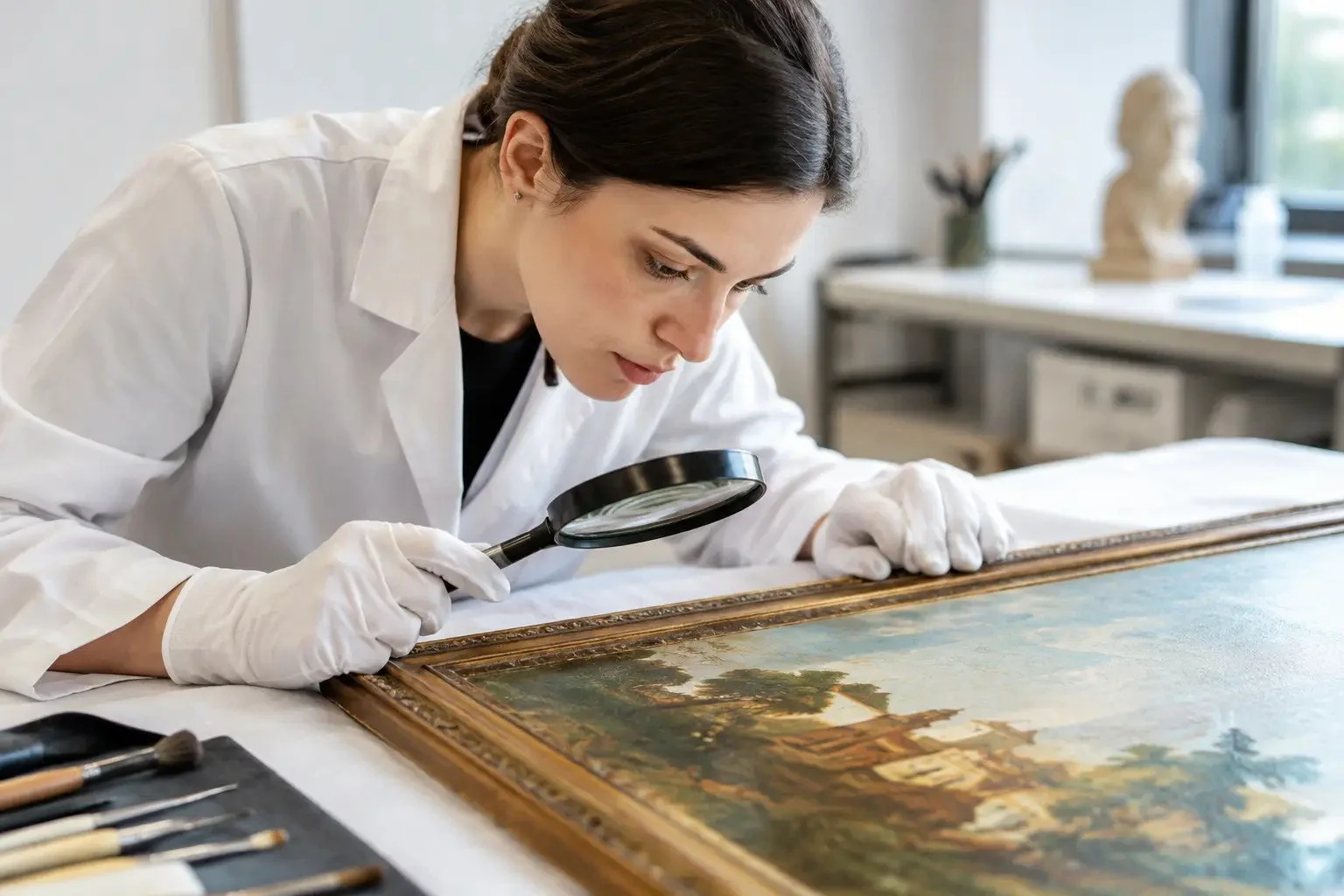
A painting can look stable under gallery light while its paper support quietly fades. A sculpture can be safely stored yet poorly documented, leaving no reliable record of its original surface or condition. Art conservation begins long before a conservator enters the room, in the everyday decisions about how a work is handled, recorded, lit and shown.
For artists, collectors, galleries and institutions in Malaysia, preservation is not a single intervention. It is a standard of care. The aim is not to make a work look newer than it is, but to keep as much of its material integrity and meaning as possible while letting it be properly seen.
Conservation is a system, not a repair
Treatment is the visible part: cleaning, consolidation, tear repair, varnish removal, structural stabilisation. Preventive conservation is the larger part. It reduces the need for treatment by controlling what causes avoidable change.
Stable environmental conditions, which matter in Malaysia's heat and humidity
Appropriate framing, mounting and storage
Careful handling, pest management and secure transport
Accurate records and considered display
Each affects the others. A fine treatment can be undone by poor mounting, and a museum-quality frame cannot make up for years of damaging light.
Restraint is the guiding principle. Craquelure, patina and tonal shifts can be meaningful evidence of material and history, not defects. Intervention should follow condition, risk, significance and the artist's intent.
Light is essential and cumulative
Light lets art be experienced, but its damage is cumulative and irreversible: fading pigments and dyes, yellowing paper, weakening textiles and altering photographs. That does not mean sensitive work should never be shown. It means display must be designed around exposure: how much light reaches the work, for how long, with what spectrum and how much ultraviolet and infrared.
LEDs have improved things greatly, with little or no ultraviolet and less heat at the object, but they are not automatically conservation-safe. Visible light still fades sensitive media. Our guides to preventing light damage and UV free LED art lights go into detail.
Quality matters as much as quantity. Poor colour rendering can distort a varnish, flatten dark passages or misrepresent a pigment. The goal is clarity that respects the artist's palette and surface, not theatrical brightness.
Documentation is a preservation practice
A high-quality image records a work at a moment in its life. Made with controlled lighting, accurate colour management, suitable resolution and attention to surface, it supports condition reports, insurance, loans, collection management, conservation and future comparison. If a crack spreads or a surface is damaged in transit, an accurate earlier image helps show what changed and when.
Casual photography and professional reproduction are not interchangeable. See our articles on artwork photography for insurance documentation and archival imaging.
Simple steps for collectors and galleries
Record before problems arise. Photograph and document each work professionally on arrival.
Control light and environment. Keep sun off artwork, manage light levels and avoid rapid humidity swings.
Handle with care. Use clean gloves where appropriate and support works properly when moving them.
Call a conservator early. Seek advice when you notice change rather than attempting repairs yourself.
Frequently asked questions
What is preventive conservation?
Controlling light, environment, handling, storage and display so that artworks need less treatment over time.
Is LED lighting conservation-safe?
Not automatically. LEDs remove most UV and heat, but visible light still causes cumulative fading.
Why photograph artworks for conservation?
An accurate record shows the work's condition at a point in time, so later change can be identified.
Conservation-minded lighting and imaging from Nuray Lab
Care starts with how a work is lit and recorded. Explore Nuray Lab's art lighting and artwork reproduction services, or contact us to discuss your collection in Malaysia.